The main thing to remember
Webflow or WordPress? It's not a question of tools. It's a question of brand, speed and autonomy.
WordPress remains relevant for dense editorial content with a technical team already in place, but every plugin you add multiplies the risk of friction. Webflow is increasingly popular because it brings design, CMS and hosting together in one environment: marketing teams gain autonomy without lowering the level of finish.
For SEO, neither is automatically better; it all depends on the method. Where the difference really plays out is maintenance: WordPress requires constant vigilance, while Webflow greatly reduces this operational burden.
The right choice depends on your ambition: if the site simply needs to exist, several options work. If it needs to convince, stand out and accelerate, the choice deserves more clear-headed thinking.
A good website is never just well built. It is well aligned.
Choosing between Webflow and WordPress isn't a technical question. It's a question of brand, speed, autonomy and growth. Behind this choice lies a real question: do you want a site you patch together, or a site that clearly supports your ambition?
For a growing brand, the wrong call costs you quickly. A marketing team blocked by technical issues. A design that degrades with every update. A website that is slow to evolve. Conversely, the right platform can become a clear lever: a more premium image, faster rollout, better control over content, better conversions.
To understand everything Webflow makes possible in practice, our article on why to build your showcase website with Webflow details these advantages.
{{block-cta-1}}
Webflow or WordPress: the real question
The Webflow or WordPress debate is often framed the wrong way. People talk about tools when they should talk about context.
WordPress is a huge ecosystem: flexible, well known, widely adopted. It can suit very different projects, from a simple blog to a complex site. But that flexibility comes at a price: you often need to assemble several building blocks, monitor plugins, handle maintenance and accept a degree of technical dependency.
Webflow follows another logic. The platform was designed to build visually ambitious websites that are clean in structure and more controlled in execution. Design, CMS, hosting and editing live in the same environment. For a brand that wants to move fast without sacrificing the level of finish, that's often a decisive advantage.
To explore another high-performing no-code tool, our comparison Webflow vs Framer: which tool to choose broadens the discussion.
The right choice therefore depends on your model, your team and your priorities. If your website is a brand asset and an acquisition tool, you need to look beyond the initial cost line.
When WordPress is still a good choice
WordPress isn't a bad tool. It's even still very relevant in some cases.
If your team already works on it, your content relies on a dense editorial logic and you have a well-managed technical environment, WordPress can be effective. It's also a credible option if your project requires very specific features, with custom development or complex integrations already designed within that ecosystem.
Its other strength is its ecosystem. Almost everything exists. Almost everything can be connected. But this richness also creates a paradox: the more plugins you add, the more you multiply the risk of friction: compatibility, security, performance, technical debt. A WordPress site can run perfectly well. It can also become fragile without warning.
For a company with an in-house technical resource or a solid provider, this is manageable. For an autonomous marketing team, it often becomes a recurring irritant.
Why more and more brands are choosing Webflow
Webflow has gained ground because it meets a very concrete need: taking back control without impoverishing the design.
In many companies, the website is stuck between two worlds. On one side, the brand wants a distinctive, precise, premium result. On the other, teams want to publish fast, tweak a page, test a message, launch a new offer. With overly fragmented stacks, these goals clash. With Webflow, they coexist better.
The first benefit is visual. Webflow lets you translate an art direction more faithfully. Layouts, animations, rhythm, hierarchy, responsive behavior: the level of control is high. For brands that no longer want to look like a vaguely customized template, that's a real issue.
To go further on the user experience Webflow enables, discover our 8 Webflow elements to improve your site's UX.
The second benefit is operational. Once the framework is well built, teams can edit content without breaking the structure. They gain autonomy. They publish faster. And above all, they depend less on a heavy technical chain to keep the site alive.
The third benefit is more discreet but strategic: consistency. When branding, UX, content and development are designed together, the site becomes more readable. This consistency relies on solid brand guidelines: the document that ensures every page of the site speaks the same visual language. The message comes across better. Perception rises. And that perception has a direct effect on conversion.
Webflow or WordPress for SEO
On SEO, the Webflow or WordPress question deserves to be treated without caricature.
No, WordPress isn't automatically better. No, Webflow isn't inherently limited. Both can perform very well if the strategic work is serious.
WordPress benefits from a historical reputation, notably thanks to its SEO plugins and editorial flexibility. For sites with very high content volumes, with a team used to producing, categorizing and optimizing at scale, it remains very effective.
Webflow, for its part, offers a clean foundation for technical SEO on many projects: clear structure, decent speed, controllable markup, metadata editing, redirect management and a well-organized CMS. For a showcase site, a brand site, a services site or a conversion-oriented site, that's more than enough to build a solid SEO engine.
To turn this technical foundation into an SEO engine, check out our 12 tips to improve your Webflow site's SEO.
The real difference doesn't lie in the fantasy of a miracle tool. It lies in the method: information architecture, editorial quality, clarity of positioning, mobile performance, pages designed for search intent. A well-designed Webflow site will do better than a WordPress site stacked up without vision. And the reverse is just as true.
The often-underestimated subject: maintenance
This is where many decisions prove good or bad over time.
A WordPress site generally requires more attention: core, theme and plugin updates, compatibility checks, security, backups, one-off interventions. Nothing insurmountable, but a real mental and operational cost. As long as everything works, this cost is invisible. As soon as a bug appears, it becomes very concrete.
Webflow greatly reduces this maintenance layer. The environment is more integrated. There are fewer moving parts and fewer risks of conflict between components. For a team that wants to focus on marketing and business rather than on the site's plumbing, the difference is far from trivial.
This advantage particularly appeals to companies of 5 to 30 employees. They need a solid website that is quick to evolve, without building a technical team around it.
The real cost isn't always what you think
Many people compare Webflow and WordPress by looking only at the subscription or hosting. That's too narrow.
WordPress can seem cheaper at first. But you need to factor in the theme, premium plugins, development, maintenance, fixes and the time spent managing it all. The total cost therefore depends heavily on the quality of the implementation and how autonomous your teams are.
Webflow often shows a more readable cost. The initial investment can be higher if you aim for custom execution, but day-to-day operation is often simpler. Fewer intermediaries. Fewer technical back-and-forths. Less hidden debt.
For a brand that sees its website as a commercial asset, the right question isn't only how much it costs. It's how much it brings in, how much it ties up, and how much friction it removes.
{{block-cta-2}}
Which choice for an ambitious brand?
If your priority is a very large editorial site connected to an already mature technical environment, WordPress can still make sense. If your priority is to roll out a strong image, a clear journey and a tool marketing teams can really use, Webflow often has the edge.
This is especially true for companies that want to move upmarket. We often see it at pivotal moments: repositioning, a new offer, a fundraise, internationalization, a need to increase conversion without diluting the brand. At that stage, the website is no longer just a medium. It becomes proof.
That's also where a holistic approach makes the difference. When the platform is chosen in connection with the positioning, the messaging, the design and the business goals, the result reaches another level. That's precisely what makes Webflow so relevant today in rebranding or brand relaunch contexts, including in studios like Studio Elias where substance and form move forward together.
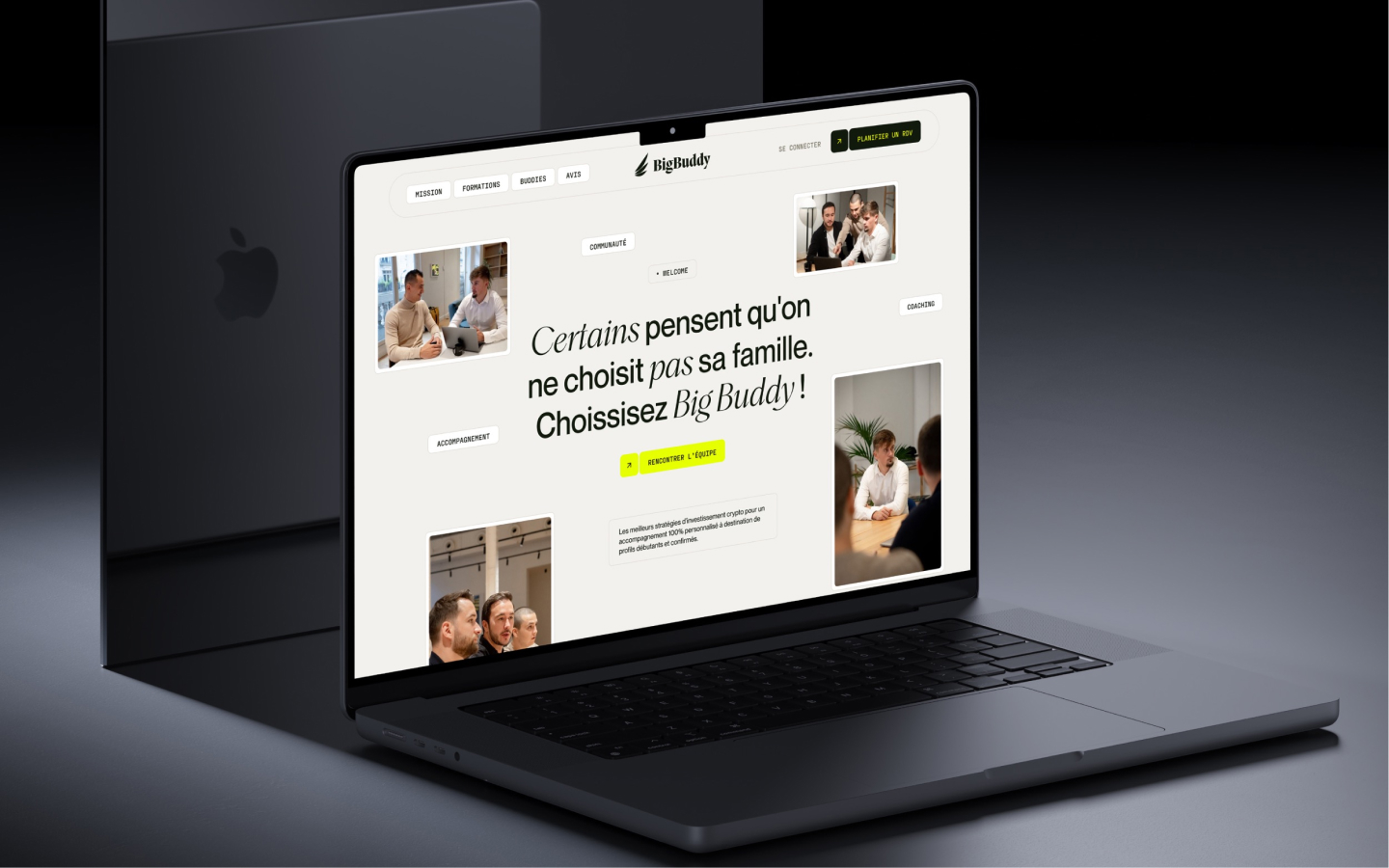
To see concrete examples of this alignment of substance and form, check out our Top 30 best agency websites.
The best platform therefore isn't the best known. It's the one that respects your ambition, your pace and your brand standards. If your website just needs to exist, several options will do. If it needs to convince, stand out and accelerate, the choice deserves more clear-headed thinking than usual.
A good website is never just well built. It is well aligned. And it's often that alignment, more than the tool itself, that makes the real difference.