
The main thing to remember
A failed brand book is beautiful in a presentation and vague in use. It lines up three colors and two typefaces, then leaves teams on their own when it's time to produce a website, a deck or a campaign.
An effective brand book starts before form. It first sets out the brand territory (positioning, promise, differentiators), then the verbal identity (tone, rhythm, vocabulary), and only then the visual identity. Without this foundation, design is just packaging.
It should cover six blocks: the brand platform, verbal identity, visual identity, the application system, a light design system and governance. Every rule must be illustrated, not just stated. A rule that can't be applied doesn't exist.
The most common mistakes: exhaustiveness that drowns clarity, empty adjectives that guide nothing, a framework so rigid it prevents expression, and forgetting non-design teams (sales, HR, product) who bring the brand to life every day.
An effective brand book doesn't try to impress. It tries to make brand consistency reproducible, in many hands, across many media, without losing sharpness.
A failed brand book is easy to spot. Beautiful in a presentation, vague in use. It lines up three colors, two typefaces and a nicely centered logo, then leaves teams on their own when it's time to produce a website, a brochure, a campaign or a LinkedIn post. That's where this corporate brand book guide becomes useful: a real framework document, not a decorative object.
The problem isn't the brand book itself. The problem is the brand book designed as an archive instead of a decision-making tool. A growing company doesn't need a reassuring PDF. It needs a reference that lets it move fast, stay consistent and raise brand perception at every touchpoint.

Why a corporate brand book really changes things
When a brand grows, dilution often starts quietly. A sales deck goes in one direction, the website in another, social media in a third. The message fragments. So does the image. The cost isn't only aesthetic. It's commercial.
The data confirms it: our study on the figures that prove branding transforms business growth quantifies this impact precisely.
A solid brand book reduces this friction. It gives a common language to founders, marketing, design, product, sales and external partners. It prevents loose interpretations. It clarifies what belongs to the brand's core identity and what can change depending on context.
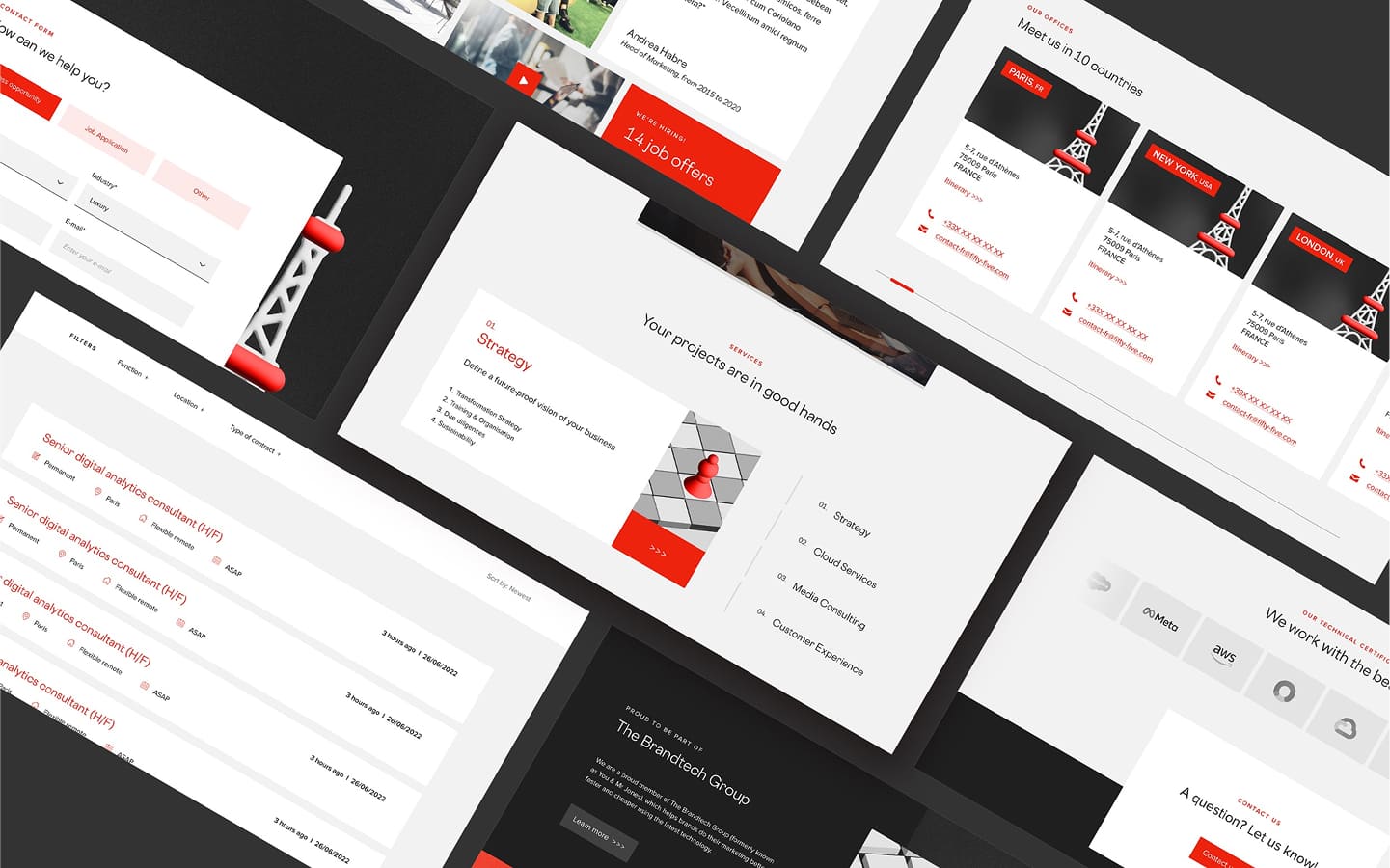
It is also a lever of speed. When the rules are clear, teams decide faster. They spend less time debating tone, style, logo usage or how formal a homepage should be. They can focus on impact.
The key point is this: a brand book isn't there to freeze a brand. It makes its consistency reproducible.
{{block-cta-1}}
{{cta-1}}
Corporate brand book guide: foundations before design
Many companies start with the visible part: logo, palette, typeface. That's logical. It's also not enough.
A good brand book starts before form. It sets out the brand territory: why the company exists, who it speaks to, what it promises, what sets it apart and what it refuses to be. Without this foundation, the visual identity becomes mere packaging. Yet a premium, credible and memorable brand never rests on appearance alone.
These questions form the core of a brand platform: the document that sets the meaning before design gives it a form.
The first section must therefore frame the positioning. Not with jargon, but with sharp wording: the mission, the value proposition, the pillars, the target, the market, the differentiators. Here, precision matters more than length.
Next comes verbal identity. It is often the most underestimated part, even though it shapes perception as much as design does. A useful brand book must spell out the tone of voice, the language level, sentence rhythm, the expressions to favor and those to ban. If your brand speaks with intensity, you need to show what that looks like on a homepage, a newsletter, a sales message or a campaign.
Only then comes visual identity. And even there, the logic must remain strategic. Every choice must be tied to an intended effect. A color isn't just a color. It sets a level of tension, desirability, contrast or trust.
What a company brand book should contain
The right content depends on the company's stage, complexity and channels. An 8-person startup doesn't have the same needs as an organization with several markets, teams and partners. But in most cases, an effective brand book covers six blocks.
The first is the brand platform: vision, mission, positioning, promise, targets and core messages. This block prevents the brand from sounding different depending on who presents it.
To go further on this topic, our guide how to build a brand platform in 5 steps details the complete process.
The second is verbal identity: tone, signature, writing rules, sample messages, hooks, banned phrases. This is what helps you avoid generic copy that makes a company interchangeable.
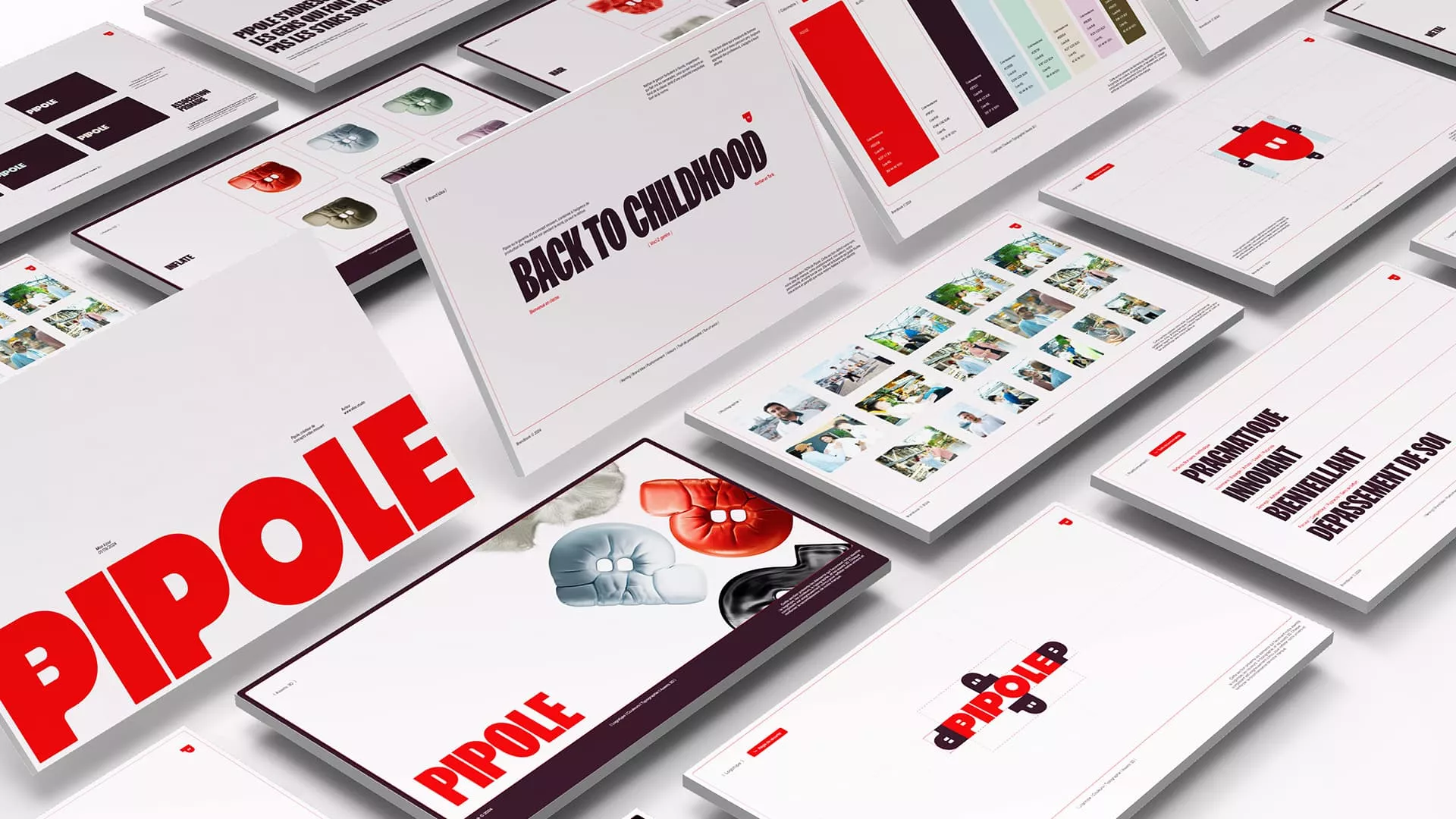
The third is visual identity: main logo, variants, clear space, minimum sizes, palette, typefaces, iconography, photo treatment, illustration, motion. Here again, you need to show the right uses and the wrong ones.
The fourth is the application system: how the brand rolls out on a website, a deck, a sales document, a social template, a landing page, a booth, a paid campaign. Without this part, the rules stay theoretical.
The fifth is a light design system, if the company is already digitally mature. This covers components, buttons, spacing, UI styles and UX principles. Very useful when the brand lives largely on the web.
The sixth is governance: who approves, who produces, when to adapt and when not to. It's less glamorous, but often decisive.

{{cta-2}}
Common mistakes in a corporate brand book guide
The most common is confusing exhaustiveness with clarity. A 120-page document can be less useful than a very well-built 35-page framework. If nobody opens it, it doesn't exist.
Another mistake: producing a brand book that is too abstract. Words like bold, human, premium or innovative aren't enough. You need to translate them. Bold how? Premium without coldness? Innovative without jargon? A rule only exists if it can be applied.
There is also the brand book that is too rigid. Some companies want to lock everything down. As a result, the brand becomes hard to roll out, especially in varied contexts. A good framework protects the essentials and leaves room on the rest.
Conversely, too much flexibility kills consistency. If everything is possible, nothing is recognizable anymore. The right level lies in balancing consistency and adaptability.
Finally, many forget the internal side. A brand book isn't only for designers or the agency. It must be understandable by sales, HR, product and customer service teams. That's often where the brand plays out day to day.
{{block-cta-2}}
When a company should formalize its brand book
Not only after a rebrand. This document becomes strategic as soon as a company enters a phase of expansion.
It's often the right time when the company is hiring, opening new channels, preparing a fundraise, accelerating acquisition, moving upmarket or targeting a more demanding market. At that stage, improvisation costs more than formalization.
We often see it with brands that have real traction but still scattered expression. The product is good. The ambition is there. But perception lags behind. That is precisely the role of the brand book: aligning what the company is, what it says and what it shows.
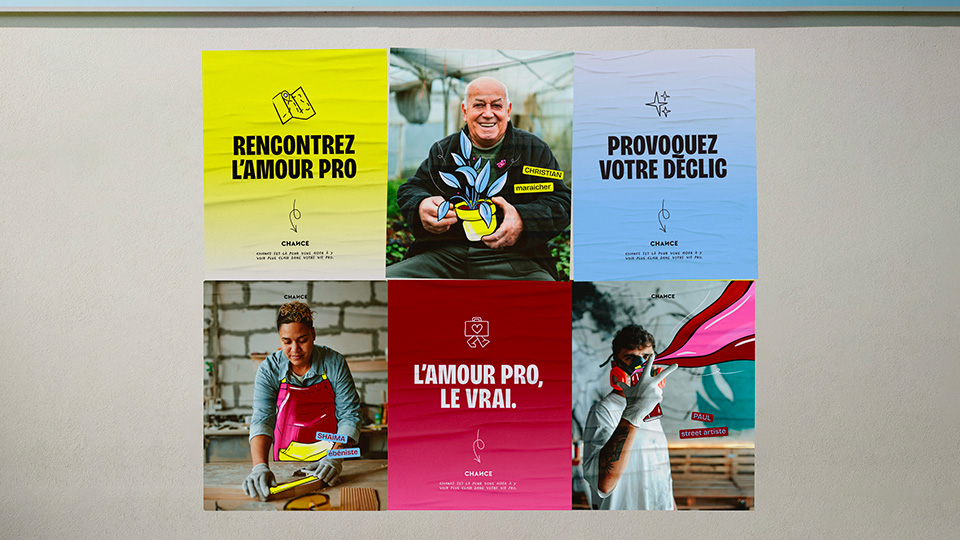
For companies like Chance or Pipole, the point isn't just to make things prettier. It's to make the message more readable, the identity more distinctive and the materials more convincing where the brand really plays out: campaigns, acquisition, sales, reputation.
How to build a brand book people actually use
The first reflex is to start from real usage, not a theoretical plan. Which materials go out every week? Who produces what? Where does the brand get diluted? Which trade-offs keep coming back? The document must address these concrete tensions.
Next, you need to prioritize. Not everything deserves the same level of detail. If your website, decks and sales materials are the main touchpoints, that's where precision should go. If social media is secondary, there's no point writing fifteen pages of rules.

The third point is examples. A good brand book shows. It doesn't just state. It compares, illustrates and puts things in context. This is even more true for editorial tone and digital applications.
Finally, think about maintenance. A brand lives. It adjusts. The brand book must therefore be able to evolve without being entirely redone every year. A modular format often works better than a fixed document.
Brand book, brand guidelines, brand platform: don't mix them up
These terms are often used as synonyms. They aren't.
The brand platform defines the substance. The brand guidelines mostly frame visual expression. The brand book connects the two and organizes how they are rolled out. It is the most cross-functional tool.
If your company only has brand guidelines, it risks having a consistent image but weak messaging. If it only has a platform, it understands its positioning but struggles to bring it to life. The brand book exists precisely to bridge that gap.
For a company of 5 to 30 employees, it is often the most relevant format. Structured enough to frame the brand, operational enough to support growth without unnecessary weight.
{{cta-3}}
An effective brand book doesn't try to impress. It tries to keep a brand holding up over time, in the hands of several people, across several media, without losing its sharpness. It's less spectacular than a rebrand. But it's often what turns a beautiful identity into a real business asset.