

In aerospace, a brand is never built by accident. It is programmed, just like an aircraft or a space launcher.
History proves it: from Aérospatiale to Airbus, and Eurocopter becoming Airbus Helicopters, the French industry has built its strongest brands through successive mergers, renamings, and repositionings. Dassault chose the opposite path: committed independence, program after program. Two radically different strategies, one same result: brands capable of earning the trust of civil and military clients on a global scale.
Today, young deeptech companies do not have the luxury of decades. They must create a strong identity from their inception to convince investors, recruit talent, and establish themselves in a sector historically reserved for the giants. This is exactly what Effiblue did with Studio Elias: building, in just a few months, a brand on par with industry benchmarks, without sacrificing any of its scientific DNA.
The lesson is the same for everyone: a brand must be built, defended, and told. It is never achieved by default.
Aerospace is an industry of programs, engineers, and technology. People readily talk about construction, production, or quality control, but rarely about branding. And yet, whether it is a century-old group or a young deeptech startup, developing your brand in aeronautics and space has never been optional. The choice of a name, a color, or a designation is no mere detail: it is a strategic decision, on the same level as an industrial program. At Studio Elias, this is a conviction we uphold for both large corporations and smaller structures, and one we invite you to discover through a few striking examples.
{{block-cta-1}}
The French aerospace industry has, since its inception, been a story of brands uniting, recreating themselves, and renaming themselves.
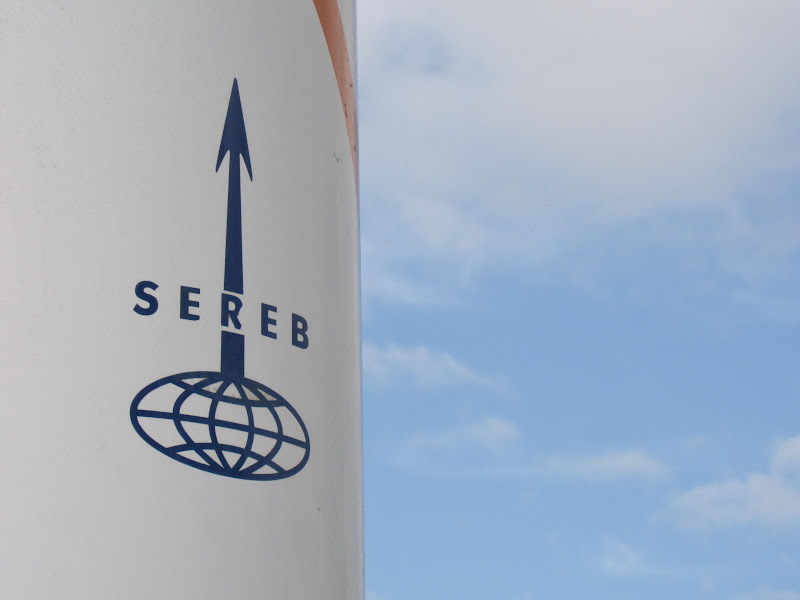
It all began in the 1950s: Nord-Aviation and Sud-Aviation were born from the merger of several state-owned companies specializing in aviation and aircraft manufacturing, while the Société pour l'Étude et la Réalisation d'Engins Balistiques (SEREB) began developing the first strategic ballistic missile programs in September 1959 as part of the French nuclear deterrent.
Three companies, three cultures, three factories, three different names, until the State decided to bring them together. On January 1, 1970, these three companies merged to create the Société Nationale Industrielle Aérospatiale, or SNIAS, which would simply become "Aérospatiale" in 1984. It was a unique entity, designed to handle the construction of aircraft, helicopters, and missiles under one single French brand, capable of competing globally with giants like North American Aviation or Boeing. This new company quickly added expertise in space to its civil and military portfolio: surveillance satellite programs, participation in the Ariane launchers, and contributions to the Concorde supersonic jet. These were all reasons to make a name for itself beyond its borders, eventually becoming an internationally recognized center of excellence.
This type of merger and brand reunification is one of the most complex cases in branding; our article on brand evolution or revolution analyzes this challenge.
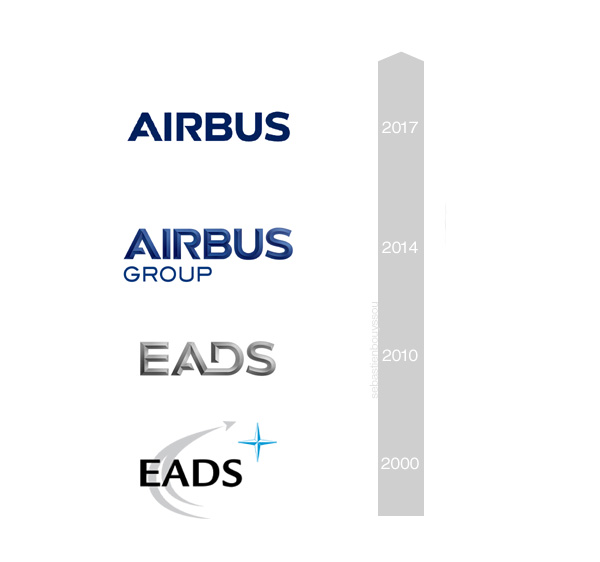
The story doesn't end there. In 1999, Aérospatiale merged with Matra Hautes Technologies. A year later, in July 2000, this new entity joined forces with Germany's DASA and Spain's CASA to give birth to EADS, the European Aeronautic Defence and Space Company. Three countries, three national industries, one single company: European cooperation became a strategic necessity in the face of American competition, at the cost of a complete reorganization of subsidiaries and the group's capital structure. In parallel, starting in 1992, the helicopter subsidiaries of Aérospatiale and its German counterpart unified to create Eurocopter, based in Marignane, which would produce the famous Puma and Gazelle before becoming Airbus Helicopters. EADS itself would eventually disappear in favor of a single, global name that is easier to promote internationally: Airbus, now Europe's leading commercial and military manufacturer, instantly recognizable by its logo and blue color.
The industry sets its calendar around major events: the Paris Air Show at Le Bourget, held every June, where all these brands compete before a global audience; financial results, published during the fiscal year starting in May and followed by a full annual report in December; and major defense and national security programs, in which each subsidiary participates according to its primary area of expertise.
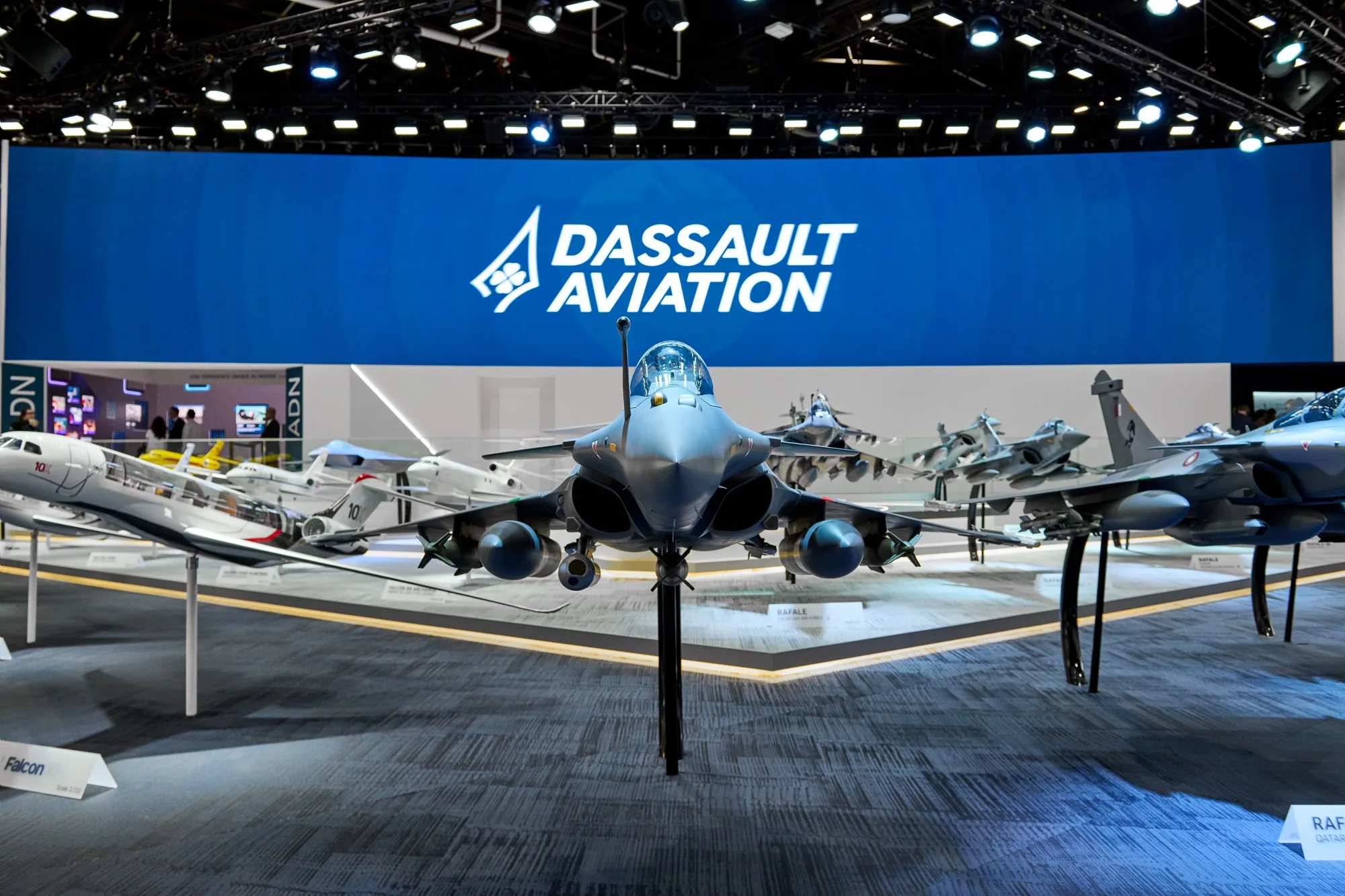
Alongside this success story of mergers, one player made the opposite choice: Dassault Aviation. The French manufacturer has always refused to merge its capital and its brand, preferring to build, program after program, a unique identity and a reputation for independent excellence. These are two radically opposed brand strategies—unification through merger versus the preservation of a distinct identity—but they share the same result: strong brands capable of earning the trust of both civil and military clients, driven by the men and women who brought France into the inner circle of the global aerospace industry.
This tension between unification and singularity is at the heart of our article on Brand differentiation: stand out or fade away.
This cycle of mergers and rebirths isn't just a thing of the past; it continues today in a different form. A company no longer needs to merge with a competitor to exist on a global scale; from the moment it is founded, it can equip itself with a strong visual identity , a recognizable logo, and a website that matches its ambition. This is the arena where young deeptech companies in the sector can now compete online with century-old groups. A prime example of this new generation of aerospace companies are those start-ups that, without factories or international subsidiaries, must generate immediate credibility to earn their place in a field historically reserved for the giants.
{{cta-1}}
These big names took decades, mergers, and rebrandings to build their reputation. Today's deeptech companies don't have that luxury: they must create a strong identity from day one, often in just a few months, to convince investors, clients, and talent. This is exactly the role Studio Elias, a branding and Webflow development agency, plays in the aerospace sector and beyond.
The numbers prove that branding drives growth, even for young organizations.
Our method remains the same, regardless of the size of the company we support: strategic consulting work to identify the positioning, followed by the creation of a visual identity (logo, graphic guidelines, colors, system), and then the development of a website designed to carry this brand's content online. Each project is treated as a full-fledged program, with an exclusive framework and support that continues until the new site goes live.
This is what we did for Effiblue, a deeptech company developing Ginestium®, a next-generation nanomaterial designed for demanding sectors such as aerospace, sports, and the mobility of tomorrow. With over ten years of existence and two funding rounds, Effiblue needed to gain the trust of demanding investors while making breakthrough technology easy to understand. Together with their team, we built a clear positioning, a sleek visual identity, a coherent graphic system, and a comprehensive website, co-created to reflect the same level of excellence as the laboratories producing the material—proof that a young company can also produce a brand on par with the biggest names in the sector, without having to replace any of its scientific DNA. A project led from the first strategic workshop to the launch, with one main goal: to make the technology itself a source of emotion.
{{cta-2}}
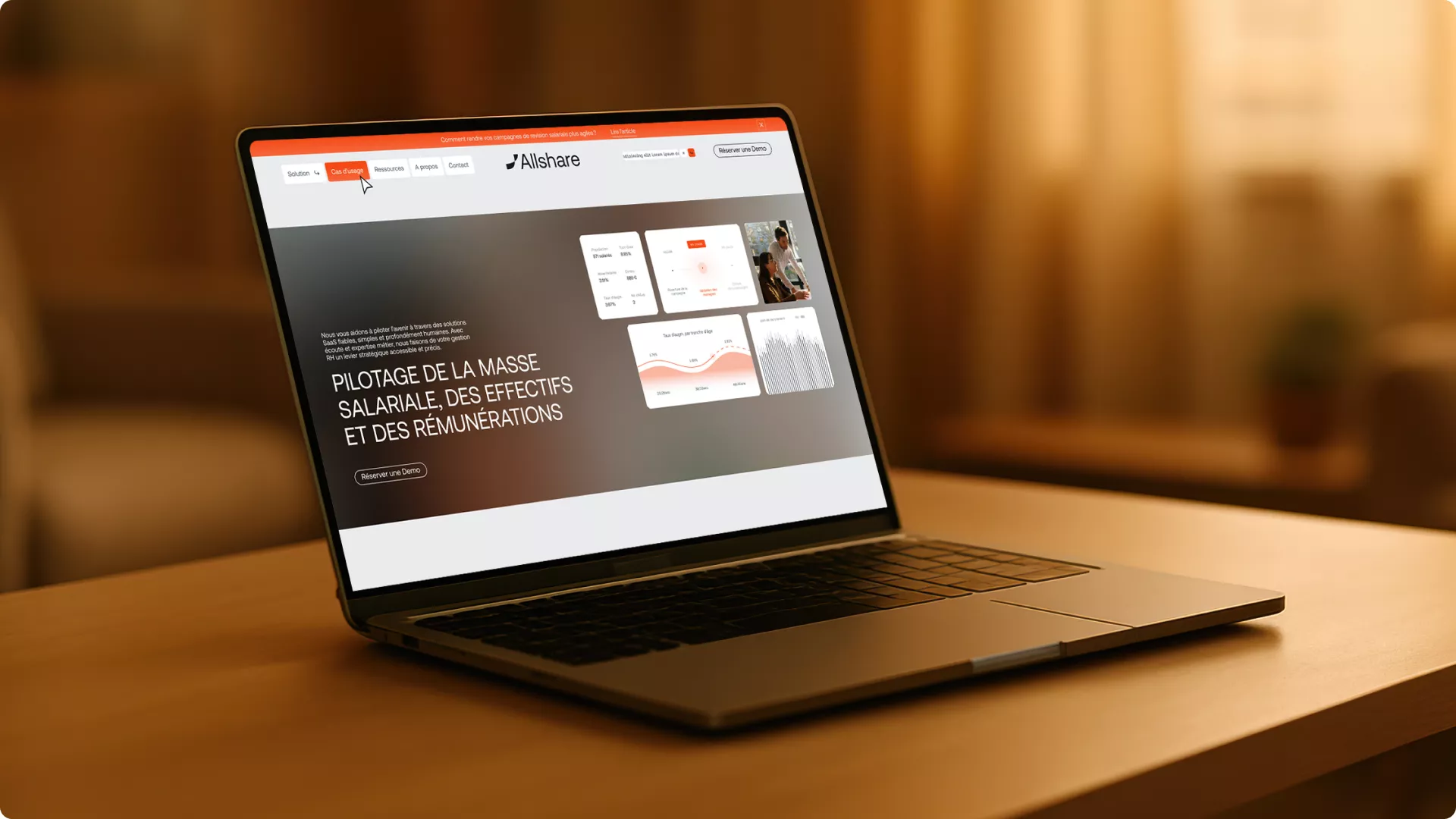
We carried out similar work for Allshare, a French company specializing in payroll management. A field far removed from aeronautics, yet sharing the same challenge: structuring a clear identity around a strong positioning, a new logo, and a Webflow site designed to support its growth and ensure every piece of content serves the brand.
From the historic mergers of Aérospatiale to the creation of Airbus, through the independent spirit of Dassault or young deeptech brands like Effiblue and Allshare, one lesson emerges: in aerospace as elsewhere, a brand is never built by accident. It requires a strategy, a clear framework, and dedicated expertise—to be approached as a rigorous program, just like an aircraft or a space launcher. Whether you are a century-old company or a startup that has just launched its first program, designing your brand is the prerequisite for long-term existence, both in France and internationally. This is the conviction that Studio Elias brings to companies in the sector, from the largest to the smallest, throughout 2026 and for years to come. From the Société Nationale Industrielle Aérospatiale to deeptech startups, one main lesson remains: a brand is built, defended, and told; it is never achieved by default. This is the work we invite you to undertake together, regardless of your field of activity.
{{cta-3}}
{{block-cta-2}}








.jpg)
.jpg)


%20(1).gif)