
Elias, Branding Studio, webflow partner

Comparison of the most used web technologies to create a website

Your brand, our focus
Agency
resources
/
Agency
/
Comparison of the most used web technologies to create a website
19/10/2024
15
Min

To create a website today, hundreds of tools are available, from the most basic to the most advanced, and choosing the right ones to build a solid website can become a real headache.

Footer of our Marmeladz project

Whether you're a business looking for an online presence or a developer aiming to launch your next project, choosing the right technologies is a crucial step. If you don't make the right choices from the start, you could end up with a slow website, pages that take forever to load, or a lack of options for future site evolution.

But before choosing your technologies, have you established the foundations of your brand identity? A high-performing website without a brand strategy risks never converting.

Between PHP, JavaScript, MySQL or even the indispensable HTML and CSS, each technology has its strengths and weaknesses. The question then is: how do you know which ones to use to ensure your objective is viable?

We're going to take a look at the most used web technologies today, to give you a boost and help you understand what lies behind each tool or framework. Because, let's be honest, nobody wants a site that crashes as soon as two users try to connect at the same time.

The darling of startups: no-code

#1 no-code website creation tool: Webflow

It has been the leading tool for the past few years. Webflow is an effective no-code tool that delivers advanced results, almost as precise as custom development. It's always possible to add code to overcome the (rare) limitations of the tool. Webflow promises a visually attractive website with high performance: whether it's page loading times, maintenance, or even SEO performance. The fact that this tool is "no-code" allows its non-developer users to easily modify content, images, text, etc.

In summary, Webflow is an excellent tool if you wish to launch your showcase website, don't hesitate to schedule an appointment with Studio Elias (recognized as an "expert" by Webflow) for some advice. To delve deeper into Webflow's SEO performance, consult our 12 tips to improve your Webflow site's SEO.
Studio built with Webflow

Discover The Ultimate Guide to Webflow in 2025 to learn more about the leading no-code tool 👨🏻‍💻

{{cta-1}}

Several competitors: Wix, Squarespace, Framer, etc.

Naturally, such an appealing technology attracts its share of competitors. There's something for everyone: depending on your skills, your website's objectives, your budget, etc. These aren't technologies in the strict sense, as these platforms combine several programming languages. Today, the needs when creating a showcase website can be quite basic, and it's sometimes unnecessary to develop everything manually.

Our client Köm, who switched from Wix to Webflow

We've put together a ranking of the best no-code tools and technologies for creating your website. And if you're hesitating between Webflow, Bubble et Wix, head here to find out which tool is best for your site.

Server-side web technologies (back-end)

Server-side web technologies: this is where everything happens, but nobody sees it. These technologies manage the invisible magic, which includes databases, user management, and dynamic software. They are essential for everything to work in the background. So, what are the main players on the server side?

PHP : the veteran still going strong

You can't talk about web development without mentioning it. Although this programming language emerged several decades ago, it still powers countless websites and web services such as WordPress, which alone powers over 40% of websites on the internet, or even Facebook (in its early days).

So, why is it still so popular? Its strength lies primarily in its ease of use and flexibility. Even if you're new to development, PHP allows you to easily create responsive web pages by connecting to databases like MySQL. It's perfect for those who want a simple tool that's quick to deploy, while still being able to manage more complex applications with minimal resources.

PHP is also supported by a massive community of web developers, offering tons of resources, tutorials, and ready-to-use libraries. Whether you're looking to create a small website for a local business or more sophisticated software, it remains a reliable choice, with broad compatibility and regular updates to stay current.

PHP

Node.js : the rising star

Once limited to the web browser, JavaScript broke free from its constraints thanks to Node.js, allowing it to shine on the server side. With Node.js, you can now develop advanced applications and manage the server side using the same language as the front-end. In other words, JavaScript becomes an all-in-one solution, simplifying developers' lives as they no longer have to juggle multiple languages.

The true strength of Node.js lies in its ability to handle large-scale tasks with numerous simultaneous interactions. Think of streaming services, real-time applications like online chats, or content sharing platforms. Node.js efficiently manages thousands of simultaneous connections, offering exceptional performance for applications requiring instant responsiveness.

Our client Fifty-five.com's website with multiple animations

{{cta-2}}

{{block-cta-1}}

With a framework like Express, Node.js further simplifies the web application development. The tools for building APIs, managing requests, and structuring projects are numerous, making the process simple and smooth. Furthermore, Node.js is supported by Google, which ensures constant support and updates, while being perfectly suited for modern services. If you have a highly interactive project, Node.js is the solution for you.

Node.js

Python and Django : the winning duo

If you're someone who likes everything neat and organized, then Python and its Django framework are perfect for you. Known for its clear and easy-to-learn syntax, Python has become a top choice for development and applications. But it's with Django, its most famous framework, that Python is particularly effective for programs.

Its principle is: "web development for perfectionists with deadlines." This framework is designed to save you time and prevent you from reinventing the wheel. It offers a robust structure for any type of website, from simple blogs to advanced applications. Django provides integrated management of databases, authentication systems, and routes for pages, and much more, all with just a few lines of code.

What makes Python and Djangopowerful is their ability to clearly structure an initiative into three layers: the model (database), the view (user interface), and the controller (action management). This allows for better code management and simpler scalability. In addition, Django integrates high-level security tools, making development more secure.

Web developers also appreciate the wide range of libraries available with Python, making it easy to add new features without much effort. If you're looking for an elegant and powerful solution for well-structured projects, Python and Django are an excellent choice.

Pyhton x Django

Ultimately, each server-side technology has its strengths and meets specific needs. Whether you choose PHP for its simplicity, Node.js for its ability to handle real-time software, or Python and Django for their elegant structure, the most crucial aspect is to carefully tailor your choice to your web strategy and the customer experience you aim to create.

This customer experience begins with a visual identity strong and a brand strategy clear, even before choosing your technical stack.

Front-end web technologies

This is where it gets real! This is what your customers see, touch, and directly interact with: web pages, content, and design. Client-side development is one of the pillars for offering a smooth and pleasant user experience. If your pages take too long to load or buttons don't respond, you'll lose your visitors in a matter of seconds. This is where front-end technologies come into play, and some have become indispensable.

HTML, CSS, and JavaScript: the core trio

The foundations of all web development are HTML (the structure), CSS (the style), and JavaScript (the touch of magic!). This trio is essential, whether you're creating a simple blog or a sophisticated web application.

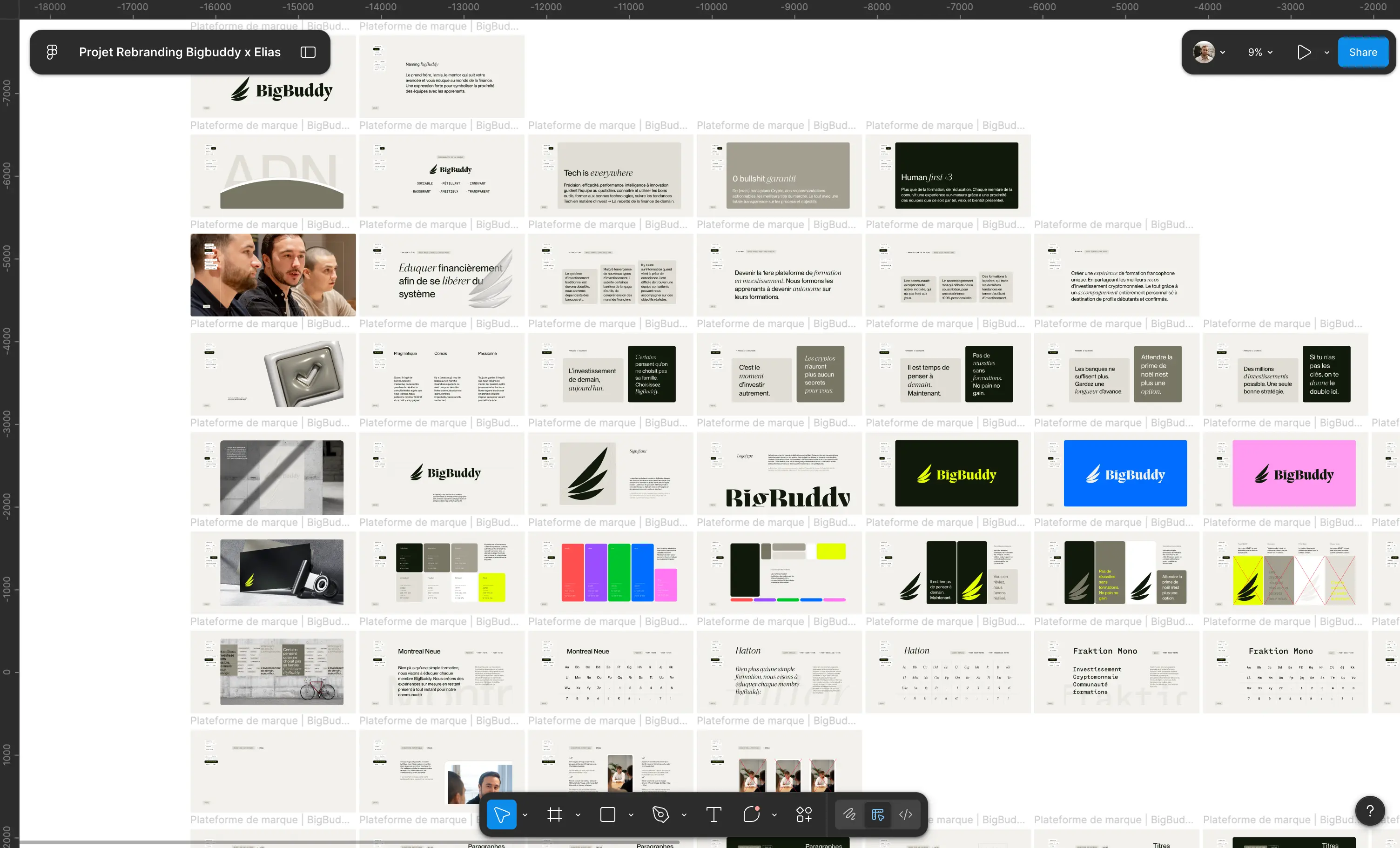
Bigbuddy Client: showcase website developed on Webflow

{{cta-3}}

These choices aren't improvised; they are part of a brand guidelines that ensures visual consistency across all your platforms.

{{block-cta-2}}

HTML : Think of HTML as the skeleton of your website. With this language, you define the various elements of your web pages: headings, paragraphs, images, links – everything that makes up your site's content. It's the foundation that allows your visitors toaccess web pages and understand the structure of your information.

CSS : Next comes CSS, the style magician. Thanks to it, you transform your HTML skeleton into a visually appealing site. You define colors, fonts, margins, animations – in short, everything that makes a site pleasing to the eye. Without CSS, your web page would be about as attractive as a technical manual.

JavaScript : Finally, JavaScript, the interactive element. It's what brings your site to life by adding reactive functionalities and user interactions. Dropdown menus, real-time reacting forms, or instant updates without reloading the web page – all of this is possible thanks to JavaScript. It is at the heart of advanced web application development and remains an indispensable language for any modern web project.

Studio Elias specializes in creating showcase websites, schedule an appointment with an expert if you wish to launch your showcase website.

In summary, without this trio, your web pages would be static, dull, and lifeless. Whether you're designing a showcase website or a more complex application, HTML, CSS, and JavaScript form the solid foundation upon which everything rests.

CSS, HTML, JavaScript

React: for interactive and modern interfaces

If you truly want to push the interactivity and modernity of your web applications, React is the go-to solution. Developed by Facebook, this technology has revolutionized the way client-side interfaces are designed. This JavaScript framework is perfect for web applications that require complex interactions and pages that update instantly, without constantly reloading the entire page.

The main advantage of this technology lies in its ability to divide the interface into reusable components. Each part of your website can be thought of as an independent block that updates based on user actions. This simplifies your code organization, but most importantly, it improves theuser experience by offering seamless and smooth navigation. For example, if you are developing an application with which users interact frequently (such as a dashboard, an e-commerce platform, or a social network), it allows you to optimize every interaction.

By using it, you also benefit from a vast ecosystem with tools and libraries designed to simplify your life. Moreover, with strong adoption by businesses and web developers, it continues to grow and innovate, ensuring you never fall behind.

Whether you use HTML, CSS and JavaScript for structure and basics, or whether you opt for a framework like React for more advanced platforms, front-end development is what makes your web pages lively and engaging. And today, with increasingly demanding users, providing a fluid user experience is no longer an option, but a necessity to stay competitive in the modern web.

Full-stack technologies: all-in-one

When you need a complete web solution, capable of managing both server-side development and client-side with a single technology, you opt for full-stacksolutions. It's like having an all-in-one toolkit that contains everything you need to build a complete application, from data management to the user interface. Two stacks are particularly popular for this: the MERN and the LAMP.

MERN: MongoDB, Express, React, Node.js

If you're looking for a solution for dynamic web applications and interactive, the MERN stack is an excellent choice. It brings together four technologies that work in perfect harmony to create a modern website and fast.

MongoDB : It's the NoSQL database which stores data in JSON format, perfectly suited for web applications that require flexibility. It is ideal for managing unstructured and large-scale data.

Express : It's a lightweight framework for Node.js that simplifies API creation and server-side route management. It's ultra-fast and saves developers valuable time.

React : As we saw earlier, it's the champion of theuser interface. It allows for the creation of dynamic web pages with reusable components, improving application fluidity and responsiveness.

Node.js : Finally, Node.js handles the server-side. It can manage thousands of simultaneous requests, making it an ideal choice for services or applications requiring high performance.

By combining these technologies, the MERN is particularly effective for web applications that require real-time interaction, such as social networks, streaming platforms, or instant messaging services. It's a stack that relies entirely on JavaScript, so if you're already comfortable with this language, you can do everything from server development to front-end, without having to learn another language.

MERN: MongoDB, Express, React, and Node.js

LAMP: Linux, Apache, MySQL, PHP

The LAMP stack is a classic in the world of web design, and for good reason: it's reliable, proven, and highly performant. It relies on a combination of technologies that, together, offer a robust solution for managing websites and applications of all sizes.

Linux : The open-source operating system on which everything relies. Linux is known for its stability and security, making it an excellent choice for servers.

Apache : This is the web server that processes user requests and redirects them to the correct content. It is incredibly flexible and supports a wide variety of modules to extend its functionalities.

MySQL : This is the relational database that manages all the data for your website or application. MySQL is one of the most widely used databases in the world, largely due to its reliability and its ability to handle large volumes of data.

PHP : Finally, PHP is the server-side language that processes requests and generates dynamic content for your web pages. It's a very popular language, especially for blogs, forums, and simpler web applications.

The LAMP stack is an excellent choice if you need a reliable and well-documented solution. It has been used in millions of programs over the years, making it a safe bet for developers looking for something robust and proven. Whether you're launching a small showcase website or a more complex application, LAMP remains a trusted solution.

LAMP: Linux, Apache, MySQL, and PHP

In conclusion, whether you choose MERN for its modernity and real-time capabilities or LAMP for its proven robustness, these two stacks are among the best choices for developers looking for a high-performing full-stack solution. They both offer great flexibility and a vast support community, ensuring you have everything you need to achieve your goal.

How to choose the web technology for your project?

The choice of technology depends on several factors:

– Project type (blog, e-commerce, advanced web application)

– Development team (junior or experienced developers)

– Budget and development time

– Scalability and future needs

Every technology has its advantages and disadvantages. For example, PHP is ideal for a basic blog or a showcase website, while Node.js excels in highly interactive web applications. And if you really want to impress your clients, consider React for a highly dynamic front-end!

Conclusion: Making the Right Choice for Your Web Project

In summary, there isn't just one right answer, but several good answers depending on your needs. Whether you want to create a website for a blog, a business, or a more complex application, the web technologies you choose will largely determine your success. Take the time to think about your project, test different options, and most importantly, have fun in this wonderful world of web development!

Elias Studio Client Project Showcase

Partner with Elias Studio for your website creation

If you're looking for a partner to bring your vision to life, Elias Studio is here to support you. Whether it's for your brand positioning, the creation of your brand guidelines, or even the creation of your showcase website., our team of Webflow development specialists and branding will guide you every step of the way. Together, let's build a platform that lives up to your ambitions!

Elias, Branding Studio, webflow partner

Brand Strategy
Brand Identity
Brand Experience
Naming
Copywriting
Brand Idea
Logo
Photography
Illustration
3D & Motion
SEO
Website
Webflow
Custom Animation
Maintenance
Webdesgin

We are brand creators. We transform projects into a strong, online brand.

Find the best technology for your website

Brand Strategy
Brand Identity
Brand Experience
Brand Strategy
Brand Identity
Brand Experience

Comparison of the most used web technologies to create a website

Ressources
/
Agency
/
Comparison of the most used web technologies to create a website
Updated on
25/5/2026
Auteur
Clément
Expert Brand & Web @ Elias
0
1
2
3
4
5
6
7
8
9
0
1
2
3
4
5
6
7
8
9
%

The main thing to remember

The technological choice for a website isn't just about personal preference or trends; it's a decision that impacts its performance, durability, and adaptability. This comparison highlights the best options based on your objectives.

  • Clarify your web objective: a simple showcase, a highly interactive site, or a full application – each case requires different technology.
  • No-code solutions offer rapid implementation and simplified management, ideal for businesses without a technical team.
  • For more complex needs (specific functionalities, large audience, advanced integrations), traditional technologies (server, front-end frameworks, APIs) become necessary.
  • No single tool is universal: the right technology depends on budget, internal skills, time, and scalability.
  • Choosing the right tech stack from the start means anticipating maintenance, scalability, and user experience, and avoiding default choices that can complicate things later.

Once well-chosen, it becomes a solid foundation. Take the time to align it with your ambitions, resources, and objectives before you begin.

To create a website today, hundreds of tools are available, from the most basic to the most advanced, and choosing the right ones to build a solid website can become a real headache.

Footer of our Marmeladz project

Whether you're a business looking for an online presence or a developer aiming to launch your next project, choosing the right technologies is a crucial step. If you don't make the right choices from the start, you could end up with a slow website, pages that take forever to load, or a lack of options for future site evolution.

But before choosing your technologies, have you established the foundations of your brand identity? A high-performing website without a brand strategy risks never converting.

Between PHP, JavaScript, MySQL or even the indispensable HTML and CSS, each technology has its strengths and weaknesses. The question then is: how do you know which ones to use to ensure your objective is viable?

We're going to take a look at the most used web technologies today, to give you a boost and help you understand what lies behind each tool or framework. Because, let's be honest, nobody wants a site that crashes as soon as two users try to connect at the same time.

The darling of startups: no-code

#1 no-code website creation tool: Webflow

It has been the leading tool for the past few years. Webflow is an effective no-code tool that delivers advanced results, almost as precise as custom development. It's always possible to add code to overcome the (rare) limitations of the tool. Webflow promises a visually attractive website with high performance: whether it's page loading times, maintenance, or even SEO performance. The fact that this tool is "no-code" allows its non-developer users to easily modify content, images, text, etc.

In summary, Webflow is an excellent tool if you wish to launch your showcase website, don't hesitate to schedule an appointment with Studio Elias (recognized as an "expert" by Webflow) for some advice. To delve deeper into Webflow's SEO performance, consult our 12 tips to improve your Webflow site's SEO.
Studio built with Webflow

Discover The Ultimate Guide to Webflow in 2025 to learn more about the leading no-code tool 👨🏻‍💻

{{cta-1}}

Several competitors: Wix, Squarespace, Framer, etc.

Naturally, such an appealing technology attracts its share of competitors. There's something for everyone: depending on your skills, your website's objectives, your budget, etc. These aren't technologies in the strict sense, as these platforms combine several programming languages. Today, the needs when creating a showcase website can be quite basic, and it's sometimes unnecessary to develop everything manually.

Our client Köm, who switched from Wix to Webflow

We've put together a ranking of the best no-code tools and technologies for creating your website. And if you're hesitating between Webflow, Bubble et Wix, head here to find out which tool is best for your site.

Server-side web technologies (back-end)

Server-side web technologies: this is where everything happens, but nobody sees it. These technologies manage the invisible magic, which includes databases, user management, and dynamic software. They are essential for everything to work in the background. So, what are the main players on the server side?

PHP : the veteran still going strong

You can't talk about web development without mentioning it. Although this programming language emerged several decades ago, it still powers countless websites and web services such as WordPress, which alone powers over 40% of websites on the internet, or even Facebook (in its early days).

So, why is it still so popular? Its strength lies primarily in its ease of use and flexibility. Even if you're new to development, PHP allows you to easily create responsive web pages by connecting to databases like MySQL. It's perfect for those who want a simple tool that's quick to deploy, while still being able to manage more complex applications with minimal resources.

PHP is also supported by a massive community of web developers, offering tons of resources, tutorials, and ready-to-use libraries. Whether you're looking to create a small website for a local business or more sophisticated software, it remains a reliable choice, with broad compatibility and regular updates to stay current.

PHP

Node.js : the rising star

Once limited to the web browser, JavaScript broke free from its constraints thanks to Node.js, allowing it to shine on the server side. With Node.js, you can now develop advanced applications and manage the server side using the same language as the front-end. In other words, JavaScript becomes an all-in-one solution, simplifying developers' lives as they no longer have to juggle multiple languages.

The true strength of Node.js lies in its ability to handle large-scale tasks with numerous simultaneous interactions. Think of streaming services, real-time applications like online chats, or content sharing platforms. Node.js efficiently manages thousands of simultaneous connections, offering exceptional performance for applications requiring instant responsiveness.

Our client Fifty-five.com's website with multiple animations

{{cta-2}}

{{block-cta-1}}

With a framework like Express, Node.js further simplifies the web application development. The tools for building APIs, managing requests, and structuring projects are numerous, making the process simple and smooth. Furthermore, Node.js is supported by Google, which ensures constant support and updates, while being perfectly suited for modern services. If you have a highly interactive project, Node.js is the solution for you.

Node.js

Python and Django : the winning duo

If you're someone who likes everything neat and organized, then Python and its Django framework are perfect for you. Known for its clear and easy-to-learn syntax, Python has become a top choice for development and applications. But it's with Django, its most famous framework, that Python is particularly effective for programs.

Its principle is: "web development for perfectionists with deadlines." This framework is designed to save you time and prevent you from reinventing the wheel. It offers a robust structure for any type of website, from simple blogs to advanced applications. Django provides integrated management of databases, authentication systems, and routes for pages, and much more, all with just a few lines of code.

What makes Python and Djangopowerful is their ability to clearly structure an initiative into three layers: the model (database), the view (user interface), and the controller (action management). This allows for better code management and simpler scalability. In addition, Django integrates high-level security tools, making development more secure.

Web developers also appreciate the wide range of libraries available with Python, making it easy to add new features without much effort. If you're looking for an elegant and powerful solution for well-structured projects, Python and Django are an excellent choice.

Pyhton x Django

Ultimately, each server-side technology has its strengths and meets specific needs. Whether you choose PHP for its simplicity, Node.js for its ability to handle real-time software, or Python and Django for their elegant structure, the most crucial aspect is to carefully tailor your choice to your web strategy and the customer experience you aim to create.

This customer experience begins with a visual identity strong and a brand strategy clear, even before choosing your technical stack.

Front-end web technologies

This is where it gets real! This is what your customers see, touch, and directly interact with: web pages, content, and design. Client-side development is one of the pillars for offering a smooth and pleasant user experience. If your pages take too long to load or buttons don't respond, you'll lose your visitors in a matter of seconds. This is where front-end technologies come into play, and some have become indispensable.

HTML, CSS, and JavaScript: the core trio

The foundations of all web development are HTML (the structure), CSS (the style), and JavaScript (the touch of magic!). This trio is essential, whether you're creating a simple blog or a sophisticated web application.

Bigbuddy Client: showcase website developed on Webflow

{{cta-3}}

These choices aren't improvised; they are part of a brand guidelines that ensures visual consistency across all your platforms.

{{block-cta-2}}

HTML : Think of HTML as the skeleton of your website. With this language, you define the various elements of your web pages: headings, paragraphs, images, links – everything that makes up your site's content. It's the foundation that allows your visitors toaccess web pages and understand the structure of your information.

CSS : Next comes CSS, the style magician. Thanks to it, you transform your HTML skeleton into a visually appealing site. You define colors, fonts, margins, animations – in short, everything that makes a site pleasing to the eye. Without CSS, your web page would be about as attractive as a technical manual.

JavaScript : Finally, JavaScript, the interactive element. It's what brings your site to life by adding reactive functionalities and user interactions. Dropdown menus, real-time reacting forms, or instant updates without reloading the web page – all of this is possible thanks to JavaScript. It is at the heart of advanced web application development and remains an indispensable language for any modern web project.

Studio Elias specializes in creating showcase websites, schedule an appointment with an expert if you wish to launch your showcase website.

In summary, without this trio, your web pages would be static, dull, and lifeless. Whether you're designing a showcase website or a more complex application, HTML, CSS, and JavaScript form the solid foundation upon which everything rests.

CSS, HTML, JavaScript

React: for interactive and modern interfaces

If you truly want to push the interactivity and modernity of your web applications, React is the go-to solution. Developed by Facebook, this technology has revolutionized the way client-side interfaces are designed. This JavaScript framework is perfect for web applications that require complex interactions and pages that update instantly, without constantly reloading the entire page.

The main advantage of this technology lies in its ability to divide the interface into reusable components. Each part of your website can be thought of as an independent block that updates based on user actions. This simplifies your code organization, but most importantly, it improves theuser experience by offering seamless and smooth navigation. For example, if you are developing an application with which users interact frequently (such as a dashboard, an e-commerce platform, or a social network), it allows you to optimize every interaction.

By using it, you also benefit from a vast ecosystem with tools and libraries designed to simplify your life. Moreover, with strong adoption by businesses and web developers, it continues to grow and innovate, ensuring you never fall behind.

Whether you use HTML, CSS and JavaScript for structure and basics, or whether you opt for a framework like React for more advanced platforms, front-end development is what makes your web pages lively and engaging. And today, with increasingly demanding users, providing a fluid user experience is no longer an option, but a necessity to stay competitive in the modern web.

Full-stack technologies: all-in-one

When you need a complete web solution, capable of managing both server-side development and client-side with a single technology, you opt for full-stacksolutions. It's like having an all-in-one toolkit that contains everything you need to build a complete application, from data management to the user interface. Two stacks are particularly popular for this: the MERN and the LAMP.

MERN: MongoDB, Express, React, Node.js

If you're looking for a solution for dynamic web applications and interactive, the MERN stack is an excellent choice. It brings together four technologies that work in perfect harmony to create a modern website and fast.

MongoDB : It's the NoSQL database which stores data in JSON format, perfectly suited for web applications that require flexibility. It is ideal for managing unstructured and large-scale data.

Express : It's a lightweight framework for Node.js that simplifies API creation and server-side route management. It's ultra-fast and saves developers valuable time.

React : As we saw earlier, it's the champion of theuser interface. It allows for the creation of dynamic web pages with reusable components, improving application fluidity and responsiveness.

Node.js : Finally, Node.js handles the server-side. It can manage thousands of simultaneous requests, making it an ideal choice for services or applications requiring high performance.

By combining these technologies, the MERN is particularly effective for web applications that require real-time interaction, such as social networks, streaming platforms, or instant messaging services. It's a stack that relies entirely on JavaScript, so if you're already comfortable with this language, you can do everything from server development to front-end, without having to learn another language.

MERN: MongoDB, Express, React, and Node.js

LAMP: Linux, Apache, MySQL, PHP

The LAMP stack is a classic in the world of web design, and for good reason: it's reliable, proven, and highly performant. It relies on a combination of technologies that, together, offer a robust solution for managing websites and applications of all sizes.

Linux : The open-source operating system on which everything relies. Linux is known for its stability and security, making it an excellent choice for servers.

Apache : This is the web server that processes user requests and redirects them to the correct content. It is incredibly flexible and supports a wide variety of modules to extend its functionalities.

MySQL : This is the relational database that manages all the data for your website or application. MySQL is one of the most widely used databases in the world, largely due to its reliability and its ability to handle large volumes of data.

PHP : Finally, PHP is the server-side language that processes requests and generates dynamic content for your web pages. It's a very popular language, especially for blogs, forums, and simpler web applications.

The LAMP stack is an excellent choice if you need a reliable and well-documented solution. It has been used in millions of programs over the years, making it a safe bet for developers looking for something robust and proven. Whether you're launching a small showcase website or a more complex application, LAMP remains a trusted solution.

LAMP: Linux, Apache, MySQL, and PHP

In conclusion, whether you choose MERN for its modernity and real-time capabilities or LAMP for its proven robustness, these two stacks are among the best choices for developers looking for a high-performing full-stack solution. They both offer great flexibility and a vast support community, ensuring you have everything you need to achieve your goal.

How to choose the web technology for your project?

The choice of technology depends on several factors:

– Project type (blog, e-commerce, advanced web application)

– Development team (junior or experienced developers)

– Budget and development time

– Scalability and future needs

Every technology has its advantages and disadvantages. For example, PHP is ideal for a basic blog or a showcase website, while Node.js excels in highly interactive web applications. And if you really want to impress your clients, consider React for a highly dynamic front-end!

Conclusion: Making the Right Choice for Your Web Project

In summary, there isn't just one right answer, but several good answers depending on your needs. Whether you want to create a website for a blog, a business, or a more complex application, the web technologies you choose will largely determine your success. Take the time to think about your project, test different options, and most importantly, have fun in this wonderful world of web development!

Elias Studio Client Project Showcase

Partner with Elias Studio for your website creation

If you're looking for a partner to bring your vision to life, Elias Studio is here to support you. Whether it's for your brand positioning, the creation of your brand guidelines, or even the creation of your showcase website., our team of Webflow development specialists and branding will guide you every step of the way. Together, let's build a platform that lives up to your ambitions!

Un projet en tête ?

Prenez un moment pour échanger avec nos équipes

Booker un call
Stratégie
Identité
Web
Stratégie
Identité
Web
Stratégie
Identité
Web

Find the best technology for your website

Brand Strategy
Brand Identity
Brand Experience
Brand Strategy
Brand Identity
Brand Experience