The main thing to remember
A brand image audit looks at an entire system, not just the logo. Three dimensions matter: external perception, internal consistency and business performance.
The signals are often diffuse: a company that is growing but keeps the image of a smaller organization, teams that say different things depending on the meeting. A brand doesn't need to be broken to need a review.
The method: read the context, analyze the positioning, examine the verbal identity, then judge the visual identity on its ability to sign, not on its aesthetics.
The question is never “is my brand beautiful?” but “is my image at the level of my ambition?”
A brand can look clean, well designed and consistent on the surface, and still hold back growth. We often see this when a company changes scale, enters a new market or wants to move upmarket. That's when a brand image audit becomes useful. Not to produce yet another document. To understand what your brand really says, what it makes people feel, and what it may be preventing without you noticing.
The subject isn't only aesthetic. A weak brand image is expensive. It lengthens sales cycles, blurs the promise, wears out acquisition and makes every communication less effective. Conversely, a clear, desirable and credible brand creates buy-in faster, internally as well as in the market.
The data confirms it: our study on the figures that prove branding transforms business growth quantifies this impact precisely.
{{block-cta-1}}
Brand image audit: what is really assessed
A good audit isn't limited to the logo, the colors or a general impression of modernity. It looks at a system: the positioning, the messaging, the visual identity, sales materials, the website, social media, and sometimes even how teams talk about the company.
The real question is simple: does the brand accurately express the company's real level? Many companies have an offer stronger than their image. Others have an appealing identity but messaging too vague to convert. The audit measures that gap.

So you need to examine three dimensions at once. External perception: what prospects, clients and partners see. Internal consistency: what teams understand and repeat. And business performance: what the image supports or slows down in acquisition, sales, recruitment or retention.
{{cta-1}}
Signs that an audit is needed
There are obvious signs: a planned redesign, a fundraise, an offer launch, an international expansion. But the most interesting signals are often more diffuse.
Your company is growing, but your image is still that of a smaller organization. Your offer is becoming premium, but your materials look generic. Your teams say different things depending on the meeting. Your website attracts but doesn't reassure enough. Or, on the contrary, it's clean but lacks intensity, and is therefore forgettable.
That's exactly what plays out in many growth contexts. A brand doesn't need to be broken to need a review. It may simply have become too narrow for the ambition it must carry.
Our client Chance, for example, had a smooth identity that was poorly aligned with the scope of its mission, just as a metro campaign was about to amplify its visibility. The problem wasn't presence. It was impact. When the messaging becomes sharper and the image more accurate, the difference shows immediately in the ability to stand out.

Same logic for a B2B company in an acceleration phase. Our client ComboHR, after a major fundraise, had to support acquisition without overspending on marketing and bring its teams on board. In this kind of case, the brand isn't just there to look solid. It must make the offer more readable, easier to adopt and more credible.
What a brand image audit should bring to light
The audit's first role is to reveal dissonance. An ambitious promise with too flat a tone. A premium website with weak content. A polished but interchangeable visual identity. A brand that wants to win key accounts while keeping the codes of a junior player.
That's the central subject of our article on brand differentiation: stand out or disappear.
Its second role is to distinguish a real underlying problem from a simple execution flaw. Not everything deserves a full rebrand. Sometimes the positioning is right but the proof is poorly showcased. Sometimes the design still holds, but the structure of the messaging no longer follows. Sometimes the foundation needs to be rebuilt.
That's where many audits miss the mark. They point out symptoms without prioritizing issues. Yet a leader doesn't need a decorative list of observations. They need to know what is really hurting the brand today, what can be fixed quickly and what requires a more structural transformation.

In practice, here are the main benefits of a good brand image:
- The brand becomes a company asset
- Your product or service is preferred over your competitors'
- It lets you raise your prices (and your margins)
- A brand attracts the right talent
- A brand builds customer loyalty and retention
- The brand drives word of mouth
The method: looking at the brand as a business lever
A serious audit starts with context. Where is the company now? Which market is it targeting now, not three years ago? Who needs to be convinced tomorrow? At what price level, visibility and standards? Without this strategic reading, you comment on forms without understanding their function.
Next, you need to analyze the positioning. Is it distinctive? Credible? Understandable in a few seconds? A brand can be elegant and still vague. In saturated markets, clarity is often worth more than gratuitous originality.
Then comes verbal identity: naming, tagline, tone of voice, key messages, how the offer is worded. This is often where the gap appears. Many companies have solid expertise but describe it with words heard a hundred times before. The result: no tension, no imprint, little memorability.
To frame that tone of voice, our article on brand copywriting and tone of voice gives a concrete framework.
The visual identity must then be judged not only on its quality, but on its ability to sign. Is the brand recognizable? Does it hold up on a sales deck, a homepage, a social post, a paid campaign? Strong art direction isn't just a trendy aesthetic. It must last, roll out and create a brand effect.
Finally, you need to look at real touchpoints: the website, presentations, offer pages, LinkedIn content, sales documents, onboarding decks. That's where consistency is verified. A brand doesn't exist in a brand book. It exists in what it repeats, everywhere.
{{cta-2}}
Brand image audit: the most common misreadings
The first mistake is believing the problem is visual because it is visible. That's not always true. A website that doesn't convert doesn't necessarily need a new interface. It may suffer from an overly abstract promise, a lack of proof or the wrong level of language.
The second mistake is confusing consistency with uniformity. A consistent brand doesn't say exactly the same thing everywhere. It keeps the same structure, the same intention and the same standards. It also knows how to adjust its messages to its audiences.
The third, more strategic mistake is launching a redesign too early or too late. Too early, when the real issue is the offer or the segmentation. Too late, when the company has already changed scale but keeps sending signals of a mid-sized player. In that case, the brand becomes a ceiling.
Our client Unow, when entering the AI market, couldn't simply add new messaging on an unchanged base. The competitive context required deeper clarification. Conversely, some companies don't need to redo everything. Above all, they need to align what already exists.
{{block-cta-2}}
How to prioritize after the audit
A useful audit leads to clear decisions. Not fifteen simultaneous projects. You need to rank them.
First, what directly influences perception in the short term: homepage, pitch, sales presentation, key messages, offer pages. Then, what structures the brand in the medium term: platform, tone of voice, visual system, design system. Finally, what serves the rollout: templates, guidelines, team training, brand governance.
Order matters. Redoing an identity without clarifying the messaging often produces a beautiful shell. Rewriting the messaging without reworking the form can limit the transformation. It all depends on the company's maturity and the nature of the problem.
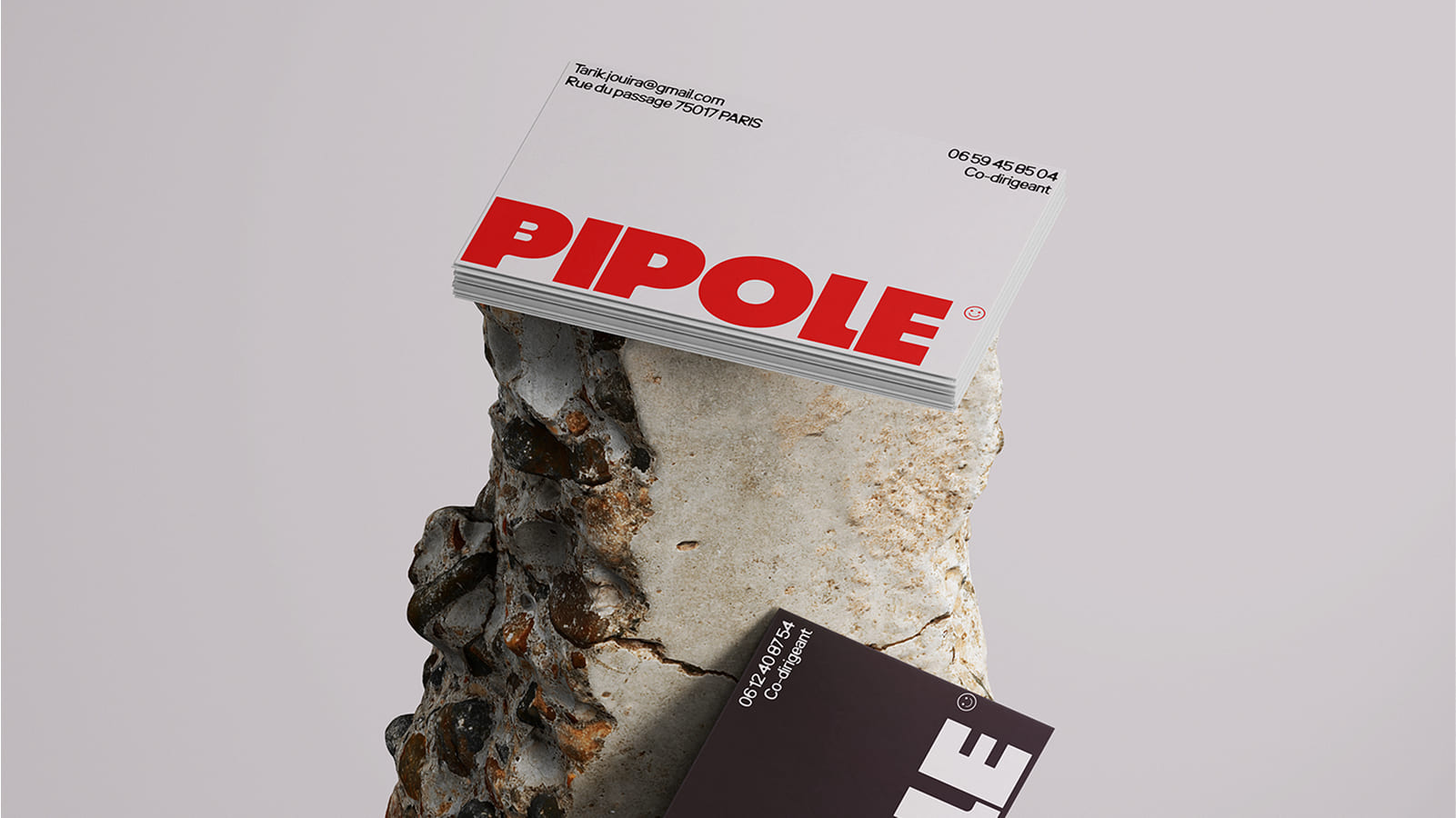
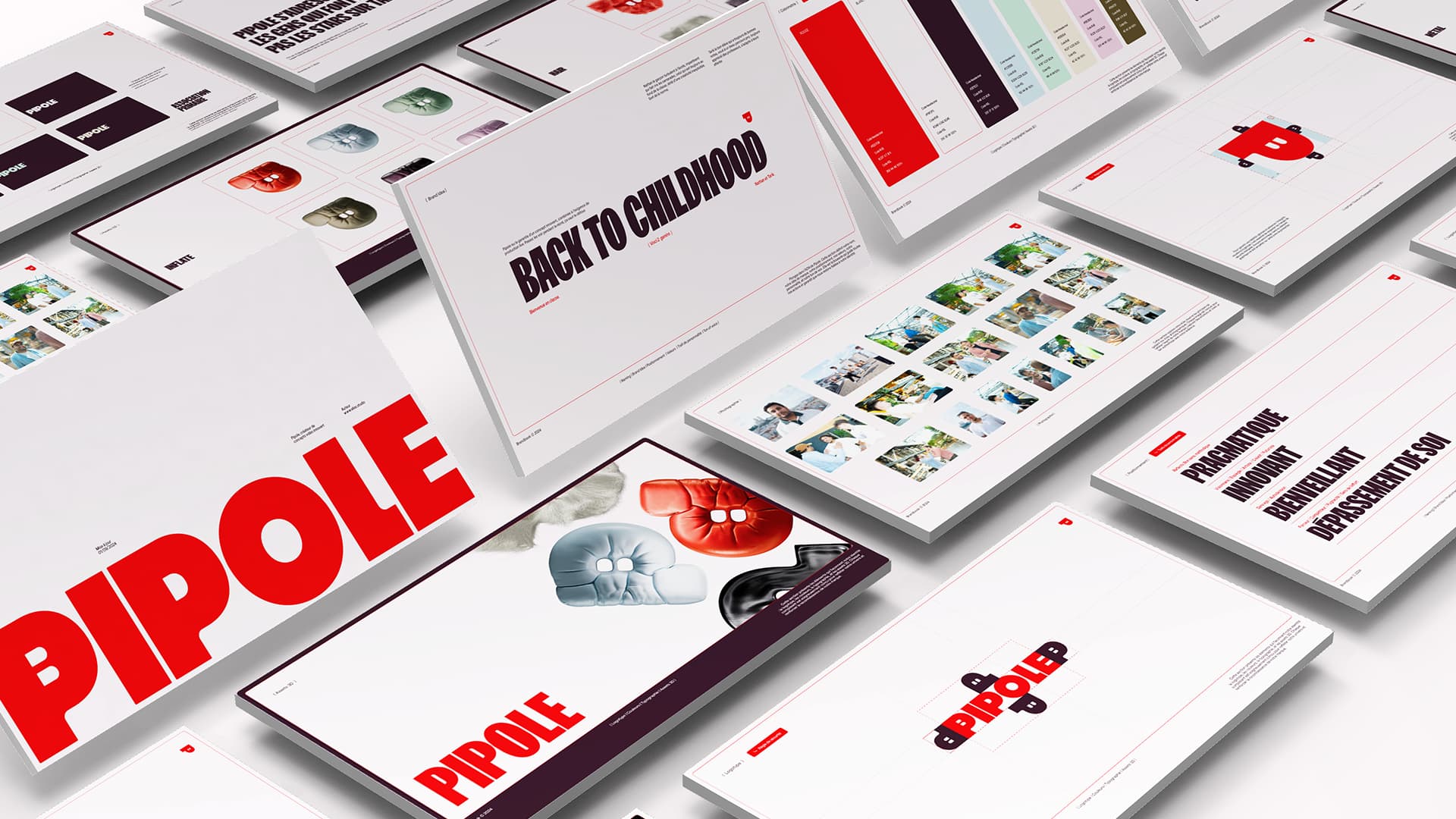
For an agency like Pipole, which wanted to win key accounts without depending on big intermediaries, the challenge wasn't only to look more premium. It needed to build an image able to support a new commercial stance. There, the brand becomes a business development accelerator.
What to expect from a brand after the audit
Not just that it looks better. That it is more accurate. Sharper. More readable. More memorable.
A good brand reduces friction. It helps people understand the offer faster. It projects the right level of value. It gives teams clear reference points for talking about the company. It also helps you break the reflex of discounting or over-explaining.
That's why a brand image audit isn't a cosmetic exercise. It's a critical reading of what your company sends out, intentionally or not. And that reading must be honest. Some brands need a light upgrade. Others require a bolder rebuild. The right diagnosis avoids the two classic traps: touching things up to reassure yourself, or redoing everything for the wrong reasons.
At Studio Elias, this question often comes up in a few very simple forms: is your image at the level of your ambition? What does it concretely bring you? If you change your color, do you lose revenue? It's rarely a neutral question.
{{cta-3}}
If your brand starts to hold back what your company is becoming, don't wait for it to break. You need to examine it closely, then decide what to strengthen. This is often when growth finds a clearer path.